The Evolution of the Duel
From High Noon to High Noon in Hell: How the Italians perfected the shootout.
The Hollywood Standard
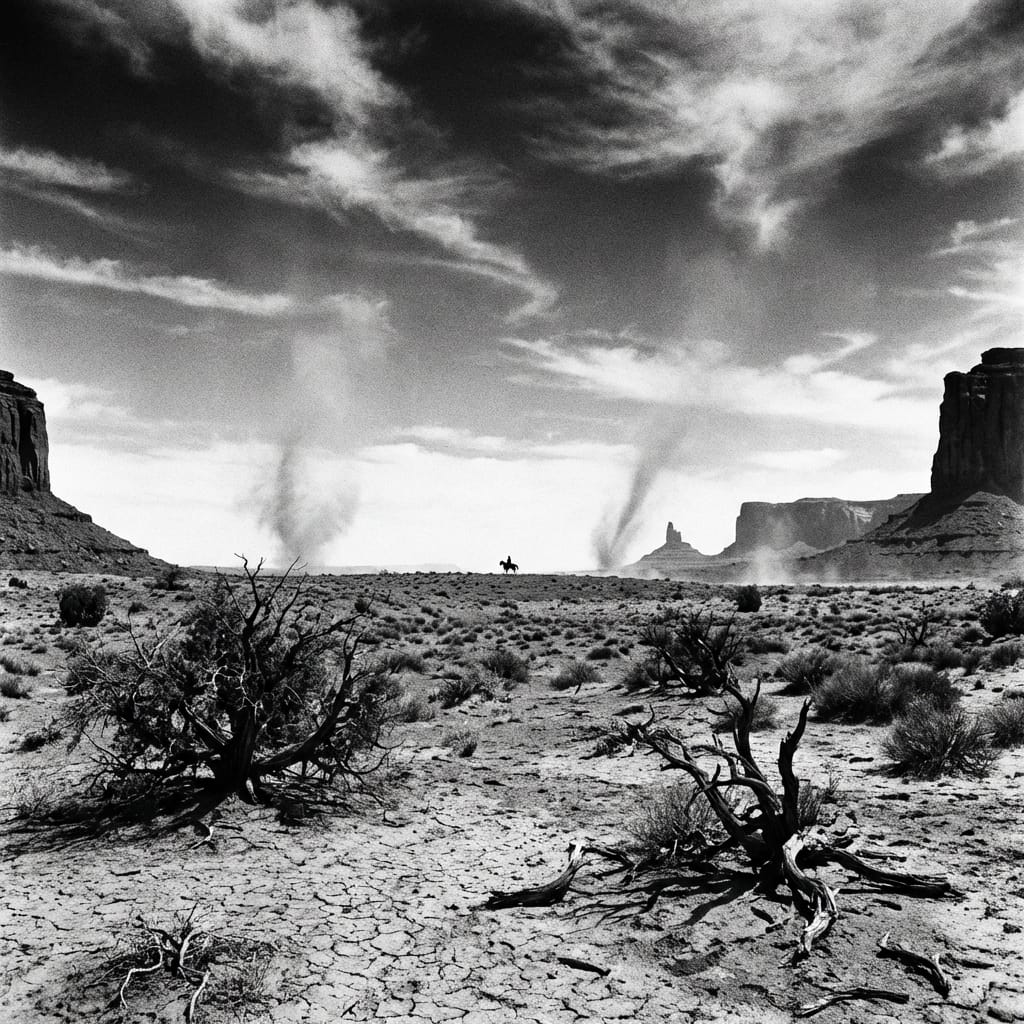
In the classic Hollywood Western, the climactic duel was a matter of narrative utility. The hero and the villain would meet in the street, they would draw, and the bad guy would fall. It was over in seconds. While tense, it was rarely the cinematic centerpiece of the film; it was simply the necessary conclusion of the plot.
Sergio Leone saw the duel not as a plot point, but as the emotional climax of the entire film. He realized that the tension leading up to the gunshot was infinitely more cinematic than the gunshot itself.
The Geometry of Death
Leone transformed the duel into a ritual. He utilized extreme wide shots to establish the geometry of the space, placing the combatants at vast distances from one another. Then, he would aggressively cut to extreme close-ups of eyes, twitching fingers, and sweating brows. This editing style stretched time, making a standoff that would last five seconds in real life take five minutes on screen.
The musical score was just as vital as the editing. Ennio Morricone's compositions would build to an unbearable crescendo, synchronizing perfectly with the cuts. The music didn't just accompany the duel; it drove the rhythm of the editing.
The Three-Way Dance
The pinnacle of this evolution was the three-way Mexican standoff at the end of The Good, the Bad and the Ugly. By adding a third participant, Leone exponentially increased the psychological tension. No one knew who was going to shoot at whom. It was a masterpiece of editing, music, and performance that has been imitated endlessly but never surpassed.
The Spaghetti Western duel became a ballet of death, proving that violence on screen could be elevated to a high art form through sheer stylistic bravado.
About the Author: Enzo Di Lucca
Enzo Di Lucca is a cinema historian and archivist specializing in European genre films.