The "Man with No Name" Myth
How an American marketing campaign created a cinematic legend.
A Brilliant Marketing Ploy
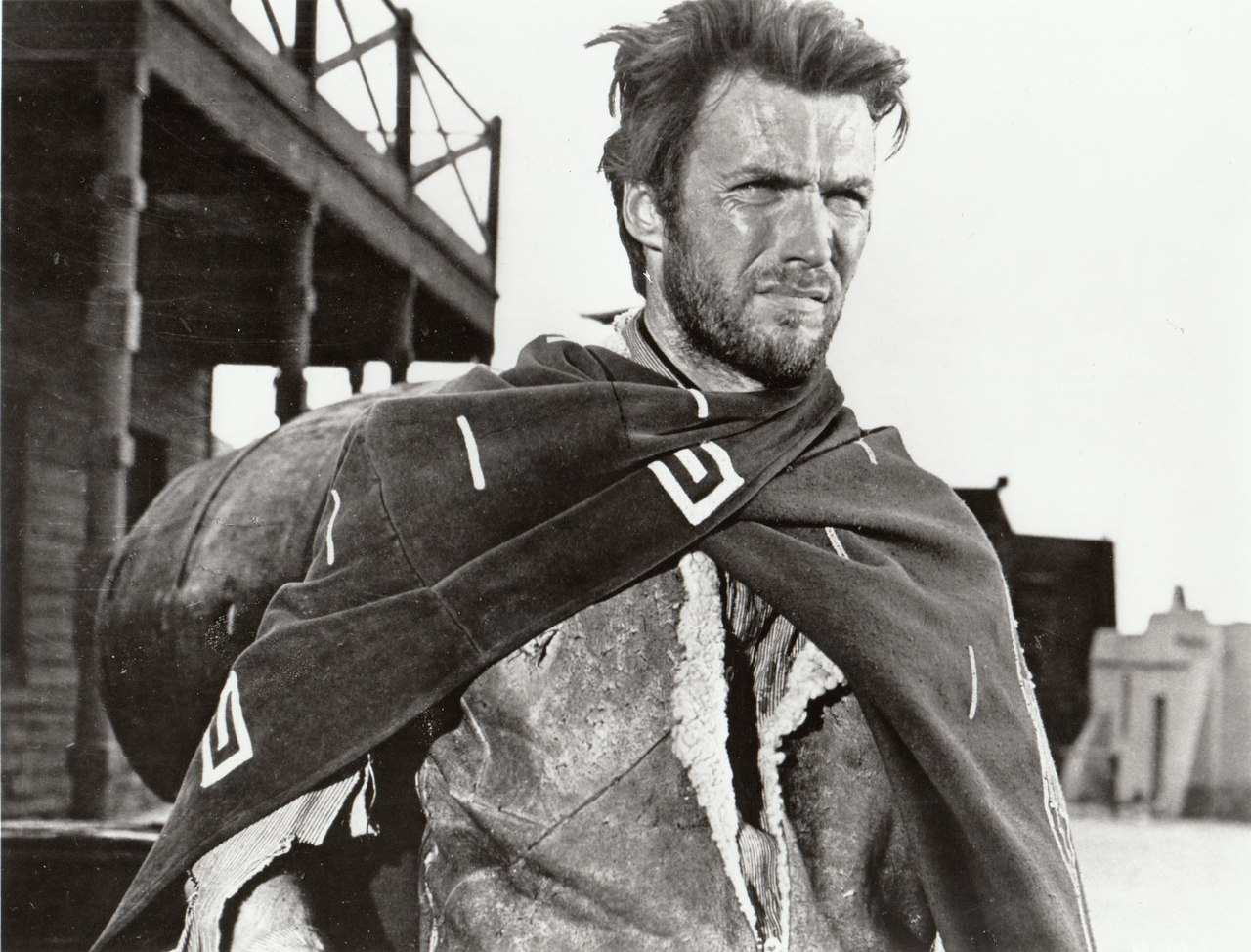
The "Man with No Name" is arguably the most famous archetype in cinematic history. Clint Eastwood's poncho-wearing, cigar-chewing anti-hero from the Dollars Trilogy is universally recognized by that title. But there's a catch: the character actually has a name in every single movie.
The moniker was entirely an invention of United Artists, the American distributor. When they realized they were bringing three separate Italian Westerns to the US market in quick succession, they needed a hook to tie them together. They noticed Eastwood wore the same poncho and hat in all three, and launched an aggressive marketing campaign billing him as "The Man with No Name."
Joe, Manco, and Blondie
If you listen to the dialogue in the films, the character's identity is quite clear. In A Fistful of Dollars, the undertaker calls him "Joe." In For a Few Dollars More, he is explicitly referred to as "Manco" (Spanish for "one-armed," a reference to how he always keeps his shooting hand hidden under his poncho until the last second).
In the epic The Good, the Bad and the Ugly, Tuco (Eli Wallach) repeatedly calls him "Blondie." While these might be nicknames rather than given birth names, he was never intended by Sergio Leone to be a nameless, mystical phantom.
The Power of the Myth
Despite the factual inaccuracy, the United Artists marketing campaign was a stroke of genius. It gave the character a mythical, almost supernatural aura. He wasn't just a drifter; he was an elemental force of nature, an angel of death who wandered out of the desert to dispense justice (or at least, violence) and then vanished back into the heat haze.
The myth of the "Man with No Name" proved so powerful that it fundamentally changed how action heroes were written for the next fifty years, prioritizing mystery and stoicism over backstory.
The Genesis of the Style
The visual style of the character was largely shaped by Eastwood himself. Before traveling to Rome to shoot the first film, Eastwood purchased the black jeans, the sheepskin vest, the boots, and the cigars from a store in Hollywood. The famous green-and-brown wool poncho was also purchased in Spain. Leone loved the look immediately, realizing that the hat and poncho created a distinct silhouette that hid the actor's body and intensified the focus on his eyes.
This visual styling, combined with Eastwood's minimalism as an actor, created a legendary screen presence. He cut out lines of dialogue from the script, preferring to act with squints and subtle gestures. The resulting character was a perfect blend of American coolness and Italian cynicism, establishing a template for the modern anti-hero that is still replicated today.
About the Author: Spaghetti Cinema Research Team
Specializing in the intersection of musicology and 1960s European cinema.