Spaghetti Westerns vs American Westerns: The Key Differences
How Italian filmmakers took an American genre and turned it on its head
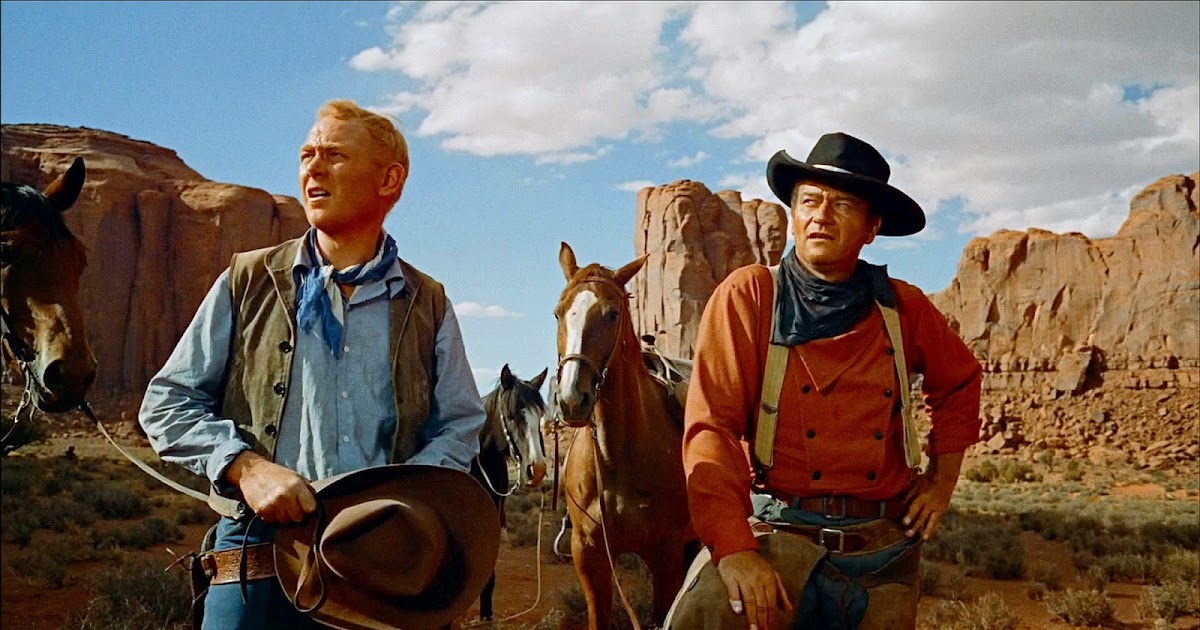
For decades, the Western was America's defining cinematic genre. From John Ford's Monument Valley epics to Howard Hawks' stoic cowboy tales, the Western told a consistent story: civilization conquering wilderness, good triumphing over evil, and the individual forging order from chaos. Then, in 1964, an Italian director named Sergio Leone released A Fistful of Dollars, and the entire mythology was rewritten.
The Spaghetti Western did not simply imitate the American Western in a different accent. It dismantled the genre's moral framework and rebuilt it from the ground up, creating something that was simultaneously a tribute and a provocation. Understanding the differences between these two traditions is essential for understanding how cinema evolves when a genre crosses cultural borders.
Morality: White Hats vs Grey Hats
The most fundamental difference between American and Italian Westerns is their treatment of morality. In the classic American tradition, heroes are identifiable by their behavior. John Wayne's characters in films like Stagecoach (1939) and The Searchers (1956) may be rough around the edges, but their core motivation is always justice, duty, or the protection of the innocent. The audience is never left in doubt about who to root for.
Spaghetti Westerns obliterated this clarity. Clint Eastwood's "Man With No Name" in Leone's Dollars Trilogy is a bounty killer who plays rival gangs against each other for profit. He occasionally does something noble, but only when it serves his interests. In Django (1966), Franco Nero's protagonist drags a coffin through the mud and massacres dozens of men with a machine gun. In The Great Silence (1968), Sergio Corbucci went even further: the hero dies, the villain wins, and justice is nowhere to be found.
This shift reflected a fundamental cultural difference. Post-war Italy had experienced fascism, occupation, and political corruption. Italian filmmakers had little patience for stories about moral certainty. Their Westerns were populated by mercenaries, opportunists, and survivors, characters for whom the concept of "the right thing" was a luxury they could not afford.
Visual Language: Landscape vs Face
John Ford is famous for his use of landscape. His Westerns frame tiny human figures against the vast red buttes of Monument Valley, emphasizing humanity's smallness against the untamed frontier. The landscape itself becomes a character, representing the promise and danger of the American West.
Leone took the opposite approach. While his films were shot in the equally striking deserts of Almeria, Spain, his camera was obsessed not with landscape but with the human face. Leone pioneered the use of extreme close-ups in Westerns, filling the entire screen with a pair of eyes, a bead of sweat, or the twitch of a finger near a holster. In the final duel of The Good, the Bad and the Ugly, Leone cuts between three pairs of eyes for nearly five minutes. The landscape recedes; the face becomes the entire world.
This tight focus on faces gave Spaghetti Westerns an intensity that American Westerns rarely achieved. Where Ford created awe, Leone created tension. Where Ford showed human beings dwarfed by nature, Leone showed human beings consumed by their own desires.
Sound: Orchestra vs Innovation
The scores of classic American Westerns were grand, orchestral affairs. Composers like Dimitri Tiomkin (High Noon) and Elmer Bernstein (The Magnificent Seven) wrote sweeping themes that evoked heroism and adventure. The music told you how to feel: triumphant, sorrowful, brave.
Ennio Morricone, who scored virtually all of Leone's films, shattered these conventions. His scores incorporated electric guitars, whip cracks, gunshots, whistling, chanting, and the twanging of a jaw harp. The iconic opening theme of The Good, the Bad and the Ugly uses a coyote howl imitated by a human voice. Morricone's music did not tell the audience how to feel; it created an atmosphere of strangeness, menace, and dark humor that no orchestral score could match.
Beyond Morricone, other Spaghetti Western composers brought their own innovations. Luis Bacalov's score for Django blended Western motifs with jazz and bossa nova. Bruno Nicolai brought baroque sensibilities to dozens of genre entries. The cumulative effect was a sonic landscape that was utterly unique in cinema.
Violence: Clean vs Operatic
In American Westerns of the studio era, violence was quick and clean. A man was shot, clutched his chest, and fell. There was rarely blood, and the camera never lingered on suffering. This was partly due to the Hays Code, which restricted the depiction of graphic violence in Hollywood films, but it also reflected a cultural preference for sanitized heroism.
Italian directors had no such restrictions. Spaghetti Westerns depicted violence with a visceral, almost operatic relish. In Django, the titular character massacres an entire gang with a Gatling gun. In The Great Silence, Klaus Kinski's villain shoots an unarmed man at point-blank range. In the Sabata films, violence is acrobatic and absurd, performed with the flourish of a circus act.
This frank approach to violence was controversial at the time, with many critics dismissing the films as gratuitously brutal. However, it also gave the genre a raw honesty that Hollywood avoided. In a Spaghetti Western, violence has consequences. Characters bleed, suffer, and die without dignity, which made the stakes feel far more real than any clean-cut showdown.
Legacy: Two Traditions, One Genre
The irony of the Spaghetti Western is that it ultimately revitalized the very genre it seemed to undermine. By the early 1960s, the American Western was in decline, its formulas exhausted and its audience shrinking. The Italian reinvention injected new energy, new visual ideas, and a new tonal range that Hollywood eventually adopted. Sam Peckinpah's The Wild Bunch (1969), with its slow-motion violence and morally ambiguous characters, owes a clear debt to the Italian tradition.
Today, the distinction between "American" and "Spaghetti" Westerns is largely academic. Modern filmmakers like Quentin Tarantino, the Coen Brothers, and Taylor Sheridan draw freely from both traditions. But the core tension between them, between moral clarity and moral ambiguity, between landscape and face, between restraint and excess, remains one of the most productive creative dialogues in the history of cinema.
About the Author: Enzo Di Lucca
Enzo Di Lucca is a cinema historian and archivist specializing in European genre films. He has spent over two decades researching the lost negatives of the Italian West and has interviewed numerous stuntmen, composers, and directors from the era.