The Almeria Connection: Where Spaghetti Westerns Were Really Filmed
How a Spanish desert became the most famous frontier in cinema
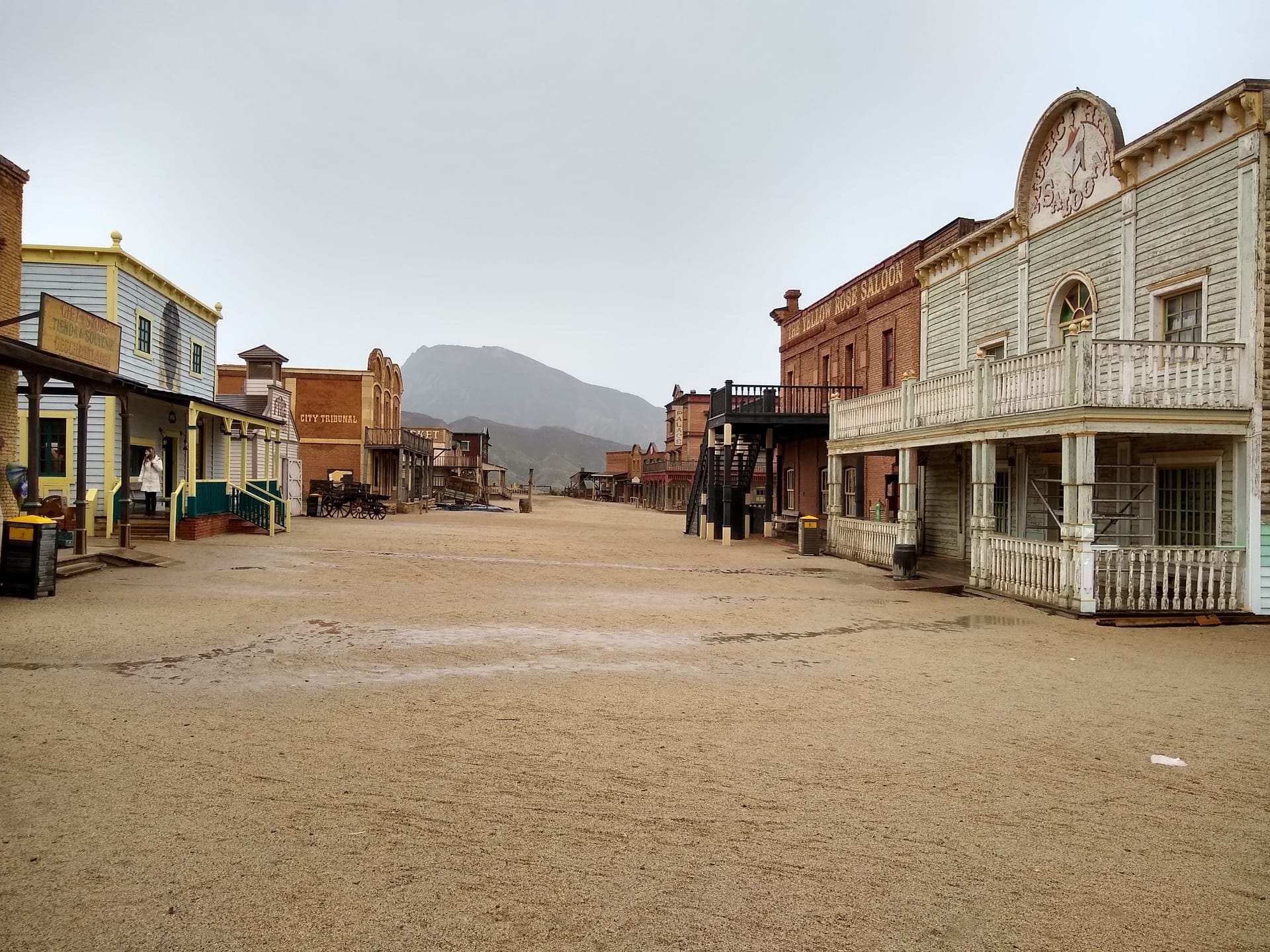
The "American West" of the Spaghetti Western was never American at all. The vast majority of Italian Westerns were filmed thousands of miles from Arizona or Texas, in a corner of southeastern Spain that offered something Hollywood's back lots could not: cheap production costs, blazing sunlight, and a barren desert landscape that looked convincingly like the frontier territories of the 1800s.
The province of Almeria, specifically the Tabernas Desert and the surrounding coastal areas of Cabo de Gata, became the most important filming location in European cinema during the 1960s and 1970s. Hundreds of Westerns, along with historical epics, war films, and adventure movies, were shot in this arid region. Its legacy is so significant that several of the original film sets still stand today, operating as tourist attractions and occasional production facilities.
Why Spain?
The choice of Spain as a filming location was driven by pure economics. Italian producers in the early 1960s needed landscapes that could pass for the American Southwest, but they had neither the budget nor the logistical capacity to shoot in the United States. Spain, under the Franco regime, offered extremely low labor costs, cooperative local authorities, and a climate that guaranteed sunshine for most of the year.
The Tabernas Desert, located roughly 30 kilometers north of the city of Almeria, is often described as the only true desert in continental Europe. Its rocky badlands, dry riverbeds, and sparse vegetation bore a striking resemblance to the landscapes of New Mexico and southern Arizona. Italian and Spanish production crews could build frontier towns, railroad depots, and cavalry forts on location at a fraction of what it would cost in Hollywood.
Spain also offered proximity. Rome, where the major Italian studios were based (primarily Cinecitta and Elios Film), was only a short flight from Almeria. Crews could film exteriors in Spain for a few weeks, then return to Rome for interior shots and post-production. This logistical flexibility allowed producers to shoot Westerns quickly and cheaply, sometimes completing two or three films per year with the same sets.
The Studios: Mini Hollywood and Beyond
The demand for Western filming locations in Almeria led to the construction of several permanent sets that eventually became tourist destinations. The most famous of these is "Mini Hollywood" (now branded as Oasys MiniHollywood), originally built for Sergio Leone's For a Few Dollars More (1965) and later expanded for other productions. The set includes a full frontier street with saloons, a bank, a sheriff's office, and a church, all designed to be photographed from multiple angles to simulate different towns.
Fort Bravo (also known as Texas Hollywood) is another surviving set, originally built for various productions in the late 1960s. It features a fort, a Mexican village, and a Western town, and it continues to host live stunt shows for tourists. Western Leone, a third major set located near Tabernas, was used extensively throughout the peak Spaghetti Western era.
At the height of production, the Almeria sets were in near-constant use. It was not uncommon for multiple productions to share the same location, sometimes filming simultaneously on different sections of the same set. This industrial-scale filmmaking gave the Spaghetti Western genre its distinctive look: the same sun-bleached buildings, the same dusty streets, and the same rocky hills appear across dozens of different films.
Notable Films Shot in Almeria
The list of films shot in or around Almeria reads like a catalog of the genre's greatest achievements. Sergio Leone filmed the climactic graveyard duel of The Good, the Bad and the Ugly at Sad Hill Cemetery, a circular set constructed specifically for the sequence near the town of Santo Domingo de Silos in Burgos province (one of the few Leone locations outside of Almeria). However, the bulk of the Dollars Trilogy was filmed in the Tabernas Desert and surrounding areas.
Sergio Corbucci shot Django (1966) in locations around Almeria and near Rome. The opening sequence, with Franco Nero dragging a coffin through the mud, was filmed on a set that still partially exists. Corbucci's later film The Great Silence (1968) was a notable exception to the Almeria tradition, as it was set in the snowy mountains of Utah and filmed in the Italian Dolomites.
Beyond the Italian Western, Almeria hosted an extraordinary range of international productions. David Lean shot Lawrence of Arabia (1962) there, using the desert to stand in for the Arabian Peninsula. Steven Spielberg returned to the same landscapes for Indiana Jones and the Last Crusade (1989). Ridley Scott, Sergio Sollima, and dozens of other directors all made use of the region's cinematic geography.
Almeria Today
The Spaghetti Western boom faded by the late 1970s, but Almeria's relationship with cinema has endured. The region continues to attract film productions, including recent television series and streaming productions that need desert exteriors. The surviving studio sets operate as popular tourist attractions, drawing fans of the genre from around the world.
In recent years, there has been a growing effort to preserve and document Almeria's film heritage. The Tabernas Desert has been recognized as a site of cultural significance, and local organizations maintain archives of the hundreds of productions filmed in the region. For fans of the Spaghetti Western, a visit to Almeria is something like a pilgrimage: the chance to walk through the same streets that Clint Eastwood, Franco Nero, and Lee Van Cleef once rode through on horseback, under the same relentless Spanish sun.
About the Author: Enzo Di Lucca
Enzo Di Lucca is a cinema historian and archivist specializing in European genre films. He has spent over two decades researching the lost negatives of the Italian West and has interviewed numerous stuntmen, composers, and directors from the era.