Tonino Valerii: Leone's Protégé and the Twilight of the Italian West
How the director of "Day of Anger" and "My Name is Nobody" bridged operatic mythmaking and elegiac satire.
From Apprentice to Auteur
Before he became one of the most respected directors in Italian genre cinema, Tonino Valerii served on the front lines of the revolution. Working as Sergio Leone's second-unit and assistant director on both A Fistful of Dollars (1964) and For a Few Dollars More (1965), Valerii watched the birth of the Spaghetti Western from behind the camera. He absorbed Leone's radical formal lessons: the wide compositions, the unbearable stretching of time, and the weaponization of Ennio Morricone's operatic themes.
Yet Valerii was never content to remain a disciple. When he made his directorial debut with Taste of Killing (1966), he immediately signaled a more disciplined, cynical aesthetic. Where Leone was mythic and operatic, Valerii was grounded in psychological tension and societal rot. His characters were not god-like gunfighters carving legends into stone; they were calculating survivors navigating corrupt frontier towns where morality was simply another commodity to trade.
Day of Anger: The Razor Edge of Mentorship
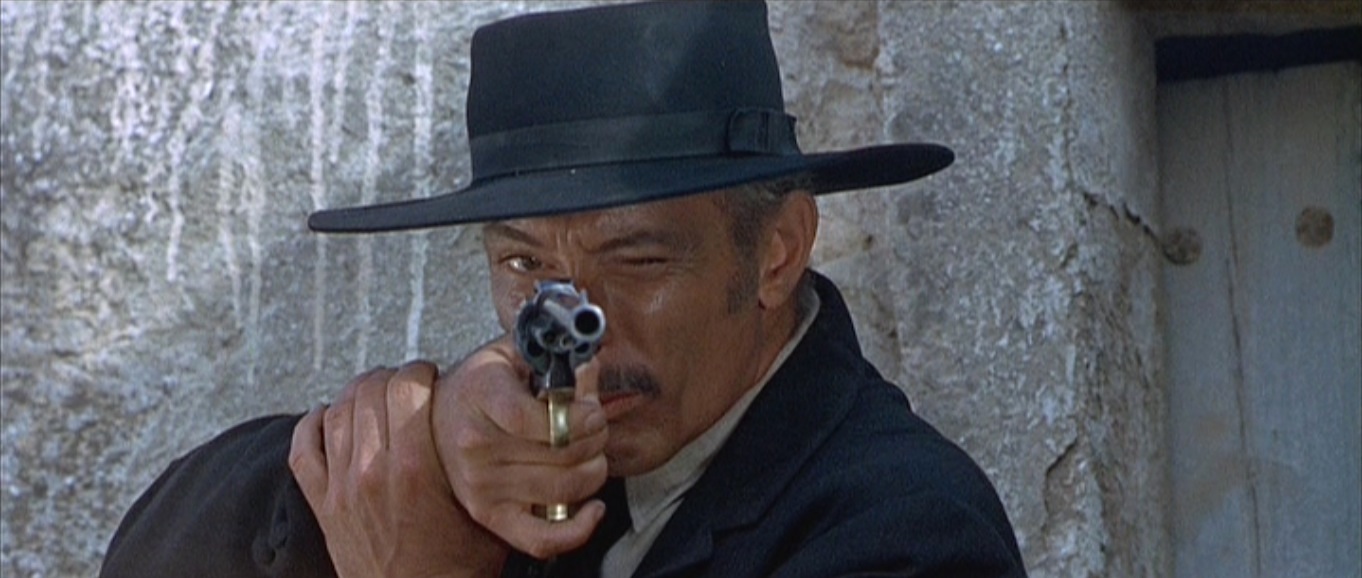
In 1967, Valerii crafted his first undisputed masterpiece: Day of Anger (I giorni dell'ira). Pairing Giuliano Gemma—the clean-cut athlete of the Italian West—with Lee Van Cleef at the absolute peak of his villainous aura, the film delivered the definitive student-mentor dynamic in western cinema.
Gemma plays Scott Mary, the bastard street-sweeper of Clifton who is kicked and humiliated by every pillar of local society. Enter Frank Talby (Van Cleef), a suave, black-clad killer who sees Scott's raw potential and takes him under his wing. Across a series of iconic "lessons" ("Never beg another man," "Never shoot when you're angry," "Never trust anyone"), Talby molds the beaten orphan into an unstoppable gunslinger.
What elevates Day of Anger above ordinary revenge thrillers is Valerii's moral nuance. As Talby ruthlessly exploits Clifton's corrupt oligarchs to seize ownership of the town, Scott realizes that his mentor has merely replaced one tyranny with another. Driven by Riz Ortolani's blistering, brass-heavy score, their inevitable final showdown becomes a tragedy of education: the student must destroy the master using the exact rules the master taught him.
The Price of Power: American Paranoia in Almería
Two years later, Valerii directed what is arguably the most politically daring Spaghetti Western ever filmed: The Price of Power (1969). Re-teaming with Giuliano Gemma, Valerii took the real-world trauma of the John F. Kennedy assassination and transposed it almost beat-for-beat to a post-Civil War Dallas.
The plot centers on a plot by racist southern bankers and industrialists to assassinate President James A. Garfield during a goodwill tour, framing an innocent Black servant for the crime. Valerii used the sun-bleached sets of Almería to mount a chilling anatomy of political assassination, institutional cover-ups, and corporate conspiracy years before Hollywood tackled similar themes in films like The Parallax View. It remains a testament to Valerii's willingness to use the genre as a vehicle for searing social inquiry.
My Name is Nobody: The Elegiac Farewell
By 1973, the Spaghetti Western was gasping for air, having degenerated into low-budget Trinity spoofs and slapstick brawls. Sensing the end of an era, Sergio Leone conceived a swan song project and handed the directorial reins to Valerii: My Name is Nobody (Il mio nome è Nessuno).
The film is a meta-cinematic dialogue between two eras of the Western. On one side stands Henry Fonda as Jack Beauregard, the tired, noble avatar of classic Hollywood frontier heroism who wants nothing more than to retire peacefully to Europe. On the other side is Terence Hill as "Nobody," the chaotic, blue-eyed embodiment of the Italian pop-art western who worships Beauregard and refuses to let him vanish quietly.
Backed by Ennio Morricone's brilliant score—which quotes Wagner's "Ride of the Valkyries" alongside carnival flutes—Valerii stages the mythic confrontation between Beauregard and the 150 riders of the Wild Bunch. When Beauregard finally boards a steamship bound for New Orleans, leaving Nobody behind to write the next chapter, Valerii didn't just close out a story; he crafted the ultimate eulogy for the golden age of the Italian West.
About the Author: Spaghetti Cinema Research Team
Dedicated to chronicling the auteurs, craftsmanship, and cinematic legacy of the Italian West.