Clint Eastwood's Italian Years: How Three Films Changed Everything
From struggling TV actor to the coolest man in cinema
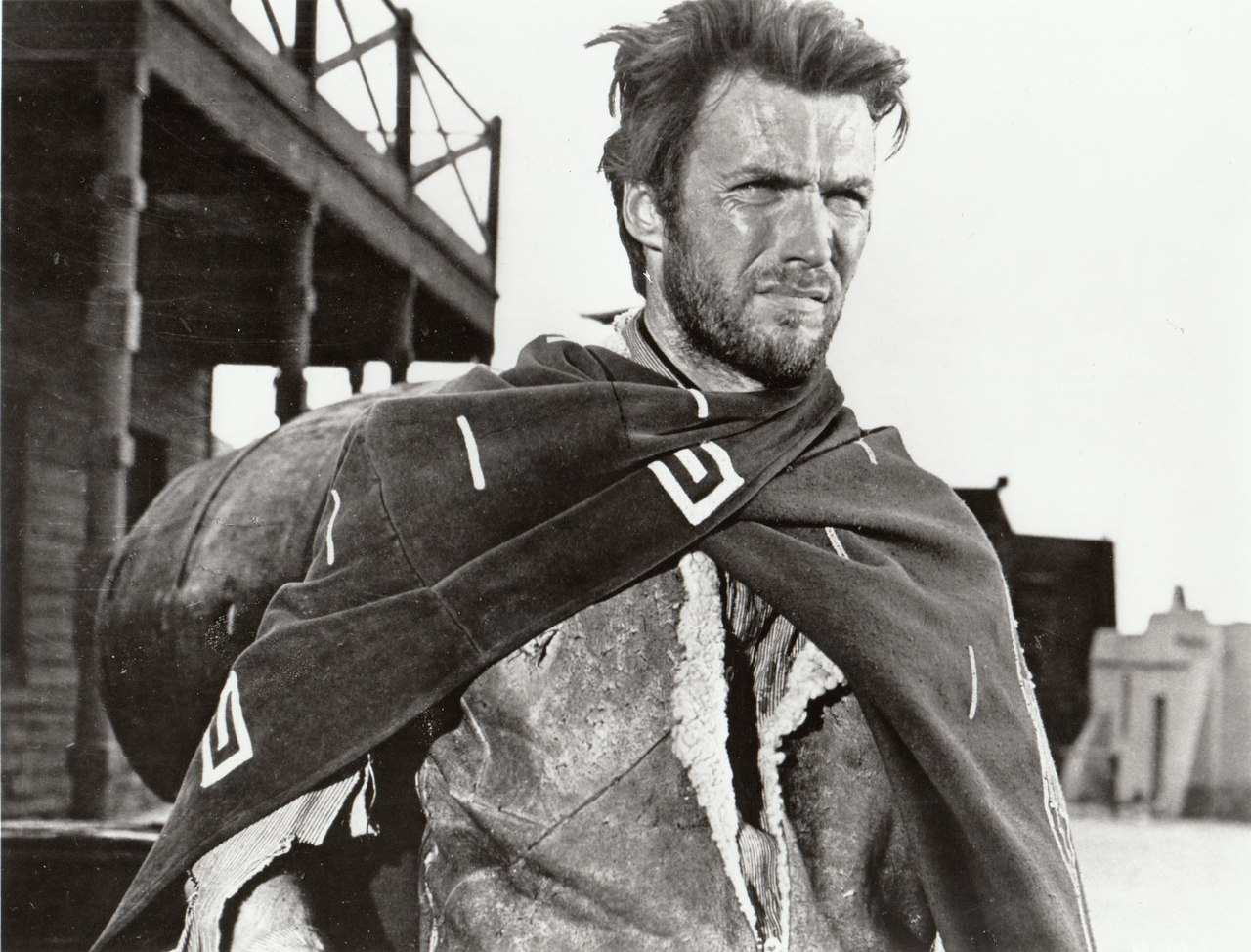
In 1963, Clint Eastwood was a 33-year-old television actor whose career had stalled. He had spent seven seasons playing Rowdy Yates on the CBS Western series Rawhide, and while the show was successful, Eastwood had been unable to translate his television presence into a film career. Hollywood saw him as a TV cowboy, nothing more. Then a telegram arrived from Rome.
A relatively unknown Italian director named Sergio Leone was looking for an American actor to star in a low-budget Western being shot in Spain. The pay was modest. The script was an unauthorized adaptation of Akira Kurosawa's Yojimbo. No major American actor would touch it. Eastwood, with few other options, accepted the role during Rawhide's seasonal break. It was the most consequential decision in modern cinema history.
A Fistful of Dollars (1964)
The first collaboration between Eastwood and Leone established the template that would define both of their careers. Eastwood played "Joe" (later retroactively called "The Man With No Name"), a drifting gunslinger who arrives in a small border town controlled by two rival families. Rather than choosing a side or pursuing justice, Joe plays both factions against each other for profit, collecting bounties while the body count rises.
Eastwood made critical contributions to the character that Leone had not originally planned. He wore his own hat and boots, insisted on a rough poncho rather than a costume, and famously suggested that the character chew on a thin cigar rather than smoke cigarettes. Most importantly, Eastwood argued for cutting dialogue. Where the script had the character explaining his plans and motives, Eastwood stripped the lines to the minimum, creating a protagonist defined by what he did not say.
The result was a new kind of Western hero: laconic, amoral, impossibly cool. American audiences had never seen anything like it. The film was a massive hit in Europe upon its 1964 release, though it did not reach American theaters until 1967 due to legal disputes with Kurosawa's production company.
For a Few Dollars More (1965)
The sequel refined and expanded everything that worked in the first film. Eastwood returned as a similar (possibly the same) character, this time paired with Lee Van Cleef as Colonel Douglas Mortimer, an older, more methodical bounty hunter. The two men form an uneasy alliance to hunt down the bandit El Indio, played with unhinged intensity by Gian Maria Volonte.
For a Few Dollars More is often cited as the most balanced film of the trilogy. It has Leone's visual flair and Morricone's inventive score, but it also has a more structured narrative and a surprising emotional core. Van Cleef's Mortimer is revealed to have a deeply personal motivation for his hunt, giving the film a dimension of tragedy that the first entry lacked.
For Eastwood, the film cemented his screen persona. He was no longer just playing a character; he was inhabiting an archetype. The squint, the poncho, the economy of movement, all of these had become a fully realized identity that audiences recognized instantly.
The Good, the Bad and the Ugly (1966)
The third and final Leone-Eastwood collaboration is widely regarded as the greatest Western ever made, and one of the greatest films in any genre. Set against the backdrop of the American Civil War, it follows three men, Blondie (Eastwood), Angel Eyes (Van Cleef), and Tuco (Eli Wallach), in a race to find $200,000 in buried Confederate gold.
The film runs nearly three hours and operates on a scale that dwarfs the previous entries. Leone stages full battle sequences, prison camp scenes, and a bridge explosion, all leading to the iconic final showdown at Sad Hill Cemetery. Morricone's score, featuring "The Ecstasy of Gold" and the main theme, is arguably the most famous collection of film music ever composed.
Eastwood's performance in The Good, the Bad and the Ugly is a masterwork of minimalism. He is the calm center of a chaotic, violent world, reacting to everything with the same steady squint. It is Eli Wallach's Tuco who dominates the screen with energy and emotion, but it is Eastwood's stillness that holds the entire film together. Leone understood that the contrast between the two was the engine of the film.
After Italy: The Launch of a Legend
When the Dollars Trilogy finally reached American theaters in 1967, Eastwood became an overnight sensation. The irony was not lost on him: he had spent years trying to break into Hollywood films, and it took an Italian director working in Spain to make him a star in his own country.
Eastwood immediately leveraged his new status. He starred in Hang 'Em High (1968), the first American attempt to replicate the Spaghetti Western formula, and then moved into the role that would become his other defining character: Dirty Harry (1971). The DNA of the Man With No Name is clearly visible in Inspector Harry Callahan: the same laconic delivery, the same moral flexibility, the same willingness to use violence as a first resort.
Eastwood eventually became one of the most successful directors in Hollywood history, winning Academy Awards for Unforgiven (1992) and Million Dollar Baby (2004). But everything traces back to those three Italian films. Without Leone's vision, without those months in the Spanish desert, the most iconic figure in American cinema would likely have remained a television supporting player.
What Eastwood Gave the Genre
Eastwood's contribution to the Spaghetti Western extends beyond his performances. He brought an American physical presence to an Italian genre, giving the films a legitimacy and accessibility that they might otherwise have lacked. European audiences wanted to see an American face in an American setting, even if the film was made by Italians. Eastwood provided that face.
More significantly, he brought a philosophy of screen acting that perfectly suited Leone's directorial style. Less dialogue, more presence. Fewer gestures, more weight. Eastwood instinctively understood that in a Leone film, the camera did most of the work, and the actor's job was to give it something worth looking at. That instinct, honed in the deserts of Almeria, became the foundation of a career that has lasted over six decades.
About the Author: Enzo Di Lucca
Enzo Di Lucca is a cinema historian and archivist specializing in European genre films. He has spent over two decades researching the lost negatives of the Italian West and has interviewed numerous stuntmen, composers, and directors from the era.